
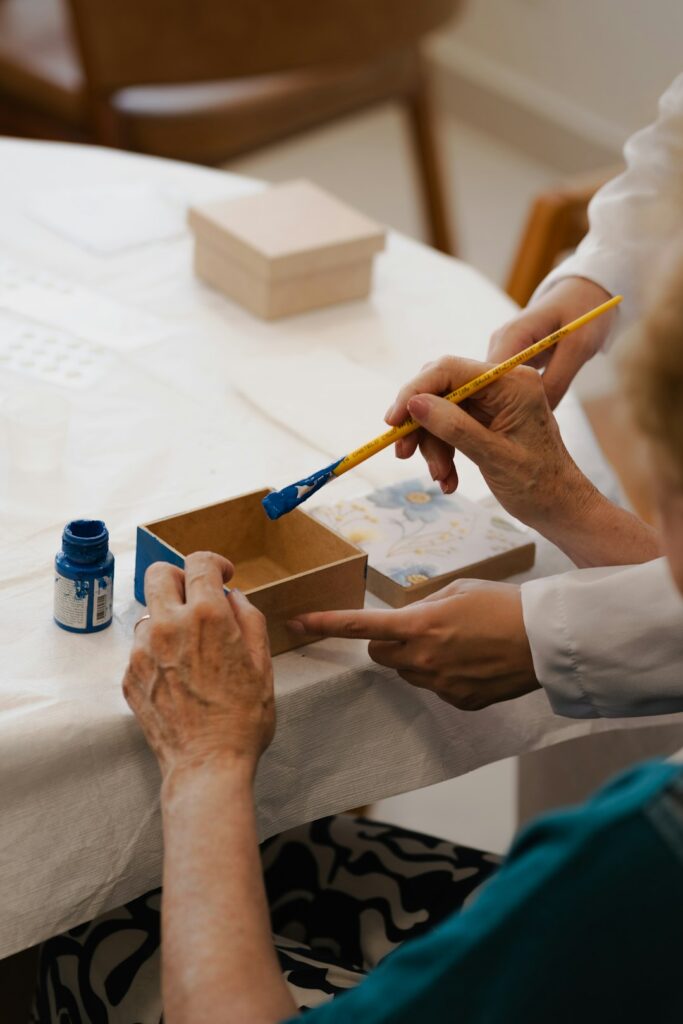
Creative hobbies can help assisted living residents stay engaged, express themselves, and maintain a sense of purpose. Activities such as painting, music, gardening, writing, crafts, and photography can be adapted for different abilities, energy levels, interests, and living spaces.
For residents in Plymouth Meeting, PA, seasonal changes may also shape hobby choices. Indoor projects are especially useful during cold winter days, while spring, summer, and fall may allow for container gardening, outdoor sketching, or nature-based activities.
What creative hobbies are suitable for assisted living residents?
The most suitable hobbies are enjoyable, flexible, and easy to modify. A good activity should not depend on perfect vision, strong hand coordination, long periods of concentration, or extensive physical stamina.
Helpful options include:
- Watercolor painting, coloring, or simple drawing
- Collage-making with large, easy-to-handle materials
- Knitting, crocheting, weaving, or fabric crafts
- Flower arranging and container gardening
- Singing, playing familiar instruments, or listening to music
- Creative writing, storytelling, and journaling
- Photography and photo organization
- Cooking demonstrations or no-bake food projects
- Seasonal decorations and handmade cards
- Puzzles, model-building, or simple woodworking projects with appropriate supervision
The goal is not to produce perfect artwork. Creative activity is valuable because it encourages choice, memory, conversation, and personal expression.
How can painting and drawing be adapted for older adults?
Painting and drawing can be made more comfortable by using larger tools, high-contrast materials, and shorter sessions. Residents who have never considered themselves artistic may enjoy simple subjects such as flowers, landscapes, household objects, or abstract color patterns.
Useful adaptations include:
- Using thick-handled brushes or foam grips
- Choosing watercolor pencils, paint sticks, or washable markers
- Taping paper to the table to keep it from sliding
- Providing bold-lined paper for drawing
- Using an easel or angled surface to reduce bending
- Offering small projects that can be completed in 20 to 30 minutes
- Providing photographs or real objects as visual references
Residents with limited vision may prefer brightly colored materials, strong lighting, and uncluttered work areas. Those with arthritis may find soft brushes, lightweight supplies, and frequent rest periods more manageable than fine-detail work.
Can music support creativity and connection?
Music is both a creative hobby and a social activity. Singing familiar songs, learning simple rhythms, playing an instrument, or creating playlists can encourage participation even when other activities feel difficult.
Music may be especially meaningful for residents living with memory loss because familiar melodies can prompt recognition, emotion, and conversation. A resident may not remember a song title but still recognize its rhythm or words.
Possible activities include:
- Group sing-alongs
- Hand percussion using shakers or drums
- Listening sessions organized around a theme
- Sharing favorite songs from different life stages
- Simple dancing or seated movement
- Making homemade instruments from safe household materials
- Discussing memories connected to music
Participation should never depend on singing ability. Listening, tapping, humming, or choosing the next song are all valid forms of involvement.
What crafts work well for residents with arthritis or limited dexterity?
Crafts can be adjusted for residents who have stiffness, tremors, weakness, or reduced hand strength. Activities that require small, precise movements may be frustrating unless the materials and pace are changed.
More accessible projects often include:
- Large-piece collage
- Decorating greeting cards with stickers
- Arranging artificial or real flowers
- Folding fabric or paper
- Painting wooden shapes
- Threading large beads
- Using self-adhesive materials instead of glue
- Creating seasonal wreaths with lightweight pieces
- Decorating pre-cut shapes
Scissors, hot glue, sharp tools, and small loose parts require appropriate supervision. Adaptive scissors, non-slip mats, easy-grip tools, and prepared materials can make participation more comfortable.
A common misconception is that a hobby must be completed independently to be meaningful. Some residents may enjoy choosing colors, sorting materials, directing another person, or contributing one part of a larger project.
How can gardening be brought into assisted living?
Gardening does not require a large yard. Container gardening, tabletop plants, herb pots, and flower arranging can bring natural elements indoors or onto a safe outdoor area.
Residents may enjoy:
- Planting herbs in small containers
- Caring for low-maintenance houseplants
- Starting seeds in labeled cups
- Decorating plant pots
- Arranging cut flowers
- Photographing seasonal changes
- Making nature collages from leaves and other safe materials
- Growing plants that appeal to touch or fragrance

Seasonal planning can make gardening more comfortable in Plymouth Meeting. During warmer months, gardening may be suited to morning or late afternoon, when heat and direct sun are less intense. During colder weather, indoor plant care and nature-themed crafts can provide a similar sense of connection.
Plants should be selected carefully if residents have allergies, pets are present, or there is a risk of soil spills or unsafe ingestion. Gardening tools should be lightweight and stored securely.
Is creative writing helpful for seniors?
Creative writing can support memory, identity, and communication. Residents do not need to write long stories. A few sentences, a dictated memory, or a list of favorite places can become a meaningful personal record.
Writing prompts might include:
- A favorite holiday tradition
- A memorable school experience
- Foods prepared for family gatherings
- A job or skill the resident once enjoyed
- A favorite season
- Advice for younger family members
- A meaningful song or photograph
- A letter to someone important
Residents who have difficulty writing may dictate their thoughts, use large-print paper, or answer questions in conversation. Family members can contribute photographs or ask about objects that have personal meaning.
Storytelling groups can also help residents learn about one another without requiring anyone to share private information. Passing around a familiar object, photograph, or recipe can make conversation easier.
How should hobbies be chosen for residents with dementia?
Residents with dementia often benefit from familiar, sensory, and success-oriented activities. The activity should be simplified without becoming childish. Adults may still have strong preferences about colors, music, clothing, food, tools, and subjects.
Helpful approaches include:
- Offer one or two choices at a time
- Use familiar materials and routines
- Demonstrate the first step
- Avoid correcting every mistake
- Break projects into short stages
- Focus on participation rather than completion
- Stop if the resident appears tired, distressed, or overwhelmed
A person who once enjoyed sewing may prefer sorting fabric, touching different textures, or selecting colors rather than completing a complicated garment. Someone who enjoyed cooking may participate by washing produce, stirring ingredients, or discussing family recipes.
How can family members support creative hobbies?
Family support is most useful when it respects the resident’s current abilities and interests. Bringing a small supply kit, photographs, old greeting cards, fabric swatches, or favorite music can provide inspiration without creating clutter.
Family members can also:
- Ask what the resident would like to try
- Join the activity instead of supervising from a distance
- Display completed work if the resident wants it shown
- Label personal projects with dates or short descriptions
- Share finished crafts with relatives
- Encourage conversation about the creative process
The best hobby is one that feels personally meaningful and manageable. For some residents, that may be making art. For others, it may be choosing music, arranging flowers, telling stories, or helping prepare materials for a group activity.
What makes a creative activity safe and enjoyable?
A safe hobby uses appropriate materials, good lighting, comfortable seating, and enough room to move without knocking over supplies. Activities should account for vision changes, hearing loss, balance concerns, medication schedules, fatigue, and allergies.
Creative sessions are usually more successful when they are offered at a consistent time, kept reasonably short, and allowed to continue without pressure. A resident may have more energy in the morning on one day and prefer a quiet activity later in the afternoon on another.
Creativity in assisted living is not measured by artistic skill. It is found in making choices, using familiar abilities, sharing memories, and taking part in something that feels worthwhile.
